Samarra was the capital of the Abbasid state after Baghdad, and its name at the time was “The Secret of the One Who Saw.” It was built by Caliph Al-Mu’tasim Billah in 221 AH/835 AD to be the capital of his state, and its ruins are still present. Among its most important remaining landmarks are the Grand Mosque and its Malawi minaret.
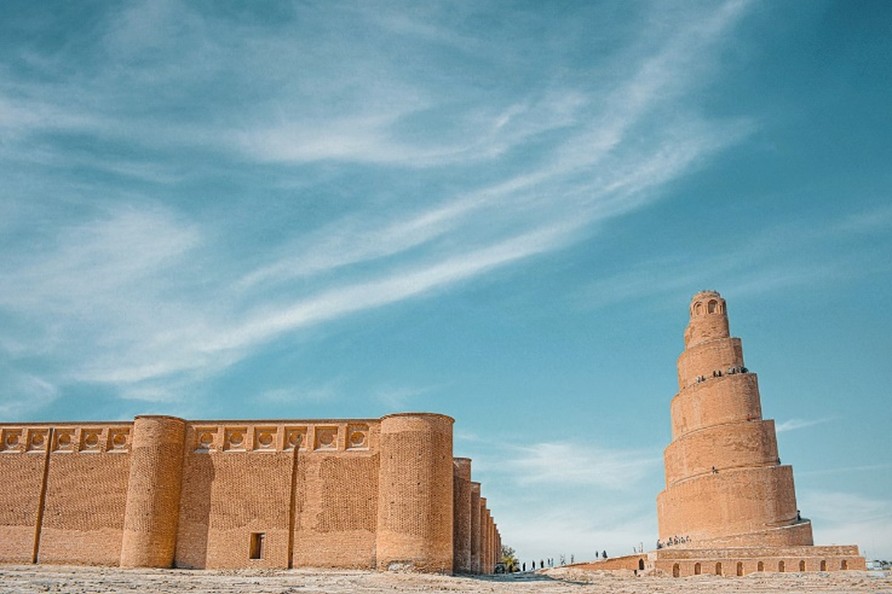
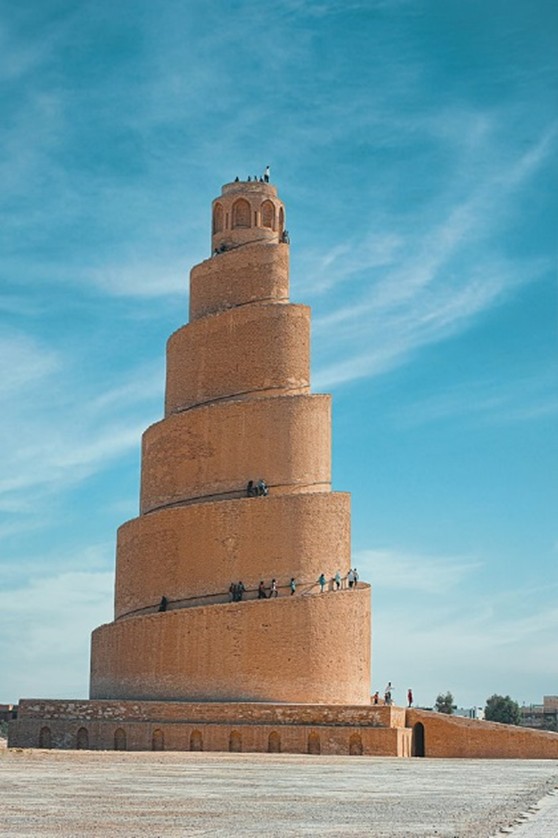
Malawi minaret
One of the famous ancient monuments of Iraq. A minaret lighthouse was originally built for the Grand Mosque, which was founded by Al-Mutawakkil Billah Al-Abbasi in the year 237 AH on the western side of the city of Samarra. Its name came from its spiral cylindrical shape. It is a clay brick building with a total height of 52 meters. It is topped by a cylindrical section consisting of five layers, the capacity of which decreases with height. It is surrounded on the outside by a spiral staircase with a width of 2 meters that winds counterclockwise and has a number of steps of 399. At the top of the summit is a layer that the people of Samarra call “the Chaun.”
The Kingdom of Hatra or the Kingdom of Arabiamen
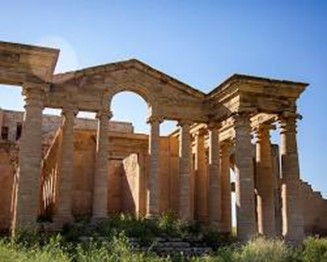
The Kingdom of Hatra appeared in the third century AD and was ruled by four kings whose rule lasted for nearly a hundred years. It is a large fortified city with a fortified wall with towers. The city’s monuments, especially the temples, where Greek and Roman architecture is mixed with decorative elements with Eastern features and roots, bear witness to the greatness of its civilization.
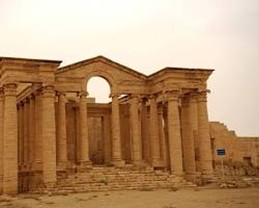
It is an ancient city located in Nineveh Governorate. It is famous for the Temple of the Sun, which is a huge temple built in the second century AD, and is considered one of the most important Roman temples in the Middle East. It is located between the Tigris and Zab, 110 kilometers southwest of Mosul on the Tharthar River. It is about 70 kilometers away from the ancient city of Assyria.
Nimrod
An ancient Assyrian city located in Nineveh Governorate. The founding of Nimrud dates back to the thirteenth century BC. The Iraqi archaeologist at the American Stony Brook University, Haider Hamdani, told the French news agency, “Nimrud was the capital of Assyria in the Neo-Assyrian era.”
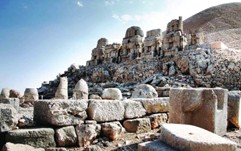
The city was founded by King Shalmaneser I, but it remained obscure until King Ashurnasirpal II chose it as his royal headquarters and the military capital of the Assyrian state. He renovated it and expanded its citadel and the area outside the walls. Then the kings after him completed the construction of the city. Throughout its history, it has been visited by successive peoples and witnessed many religions and cultures. It is famous for its many sculptures and frescoes depicting scenes from war, hunting, and daily life.
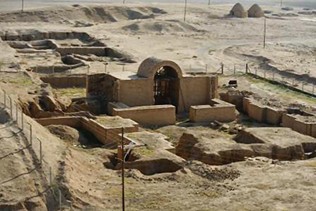
Relics from the Temple of Nebo: Dedicated to the worship of the god Nebo, the god of wisdom and knowledge.