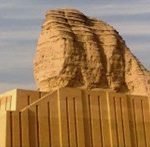
The Iwan of al-Mada’in (Iwan of kosra or Taq of kosra), or what is known as the archaeological sign of Khosrow, was established by the Persian king Khosrow I Anushirvan in the year 540 AD by prisoners, and similar to the Greater Antioch, their original city, which the Roman Arabs called it. It was built in the sixth century and is considered the largest arch built of bricks in the world, and it is the monument. The remainder is from one of Khosrau Anushirwan’s palaces, located south of the city of Baghdad on the site of the city of Ctesiphon, located in the Al-Mada’in region administratively affiliated with Baghdad Governorate. This monument represents the largest hall of Khosrau’s iwan, covered with brickwork in the form of an arch without the use of supports or any reinforcement.
Taq kosra is distinguished by its towering height, reaching 37 metres. The iwan consists of two basic parts: the building itself and the arch next to it. Taq kosra consists of a huge arch built of bricks, decorated with many beautiful inscriptions and decorations. Taq kosra is considered one of the most important archaeological monuments in Iraq, and is included on the UNESCO World Heritage List.