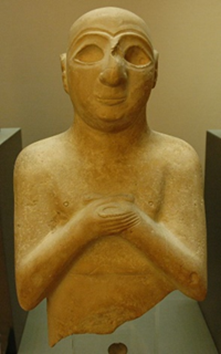
An archaeological site of a Sumerian city located in Tell Al-Muqayr in southern Iraq. It is the city of the father of the prophets, the Prophet Abraham.
It was also the capital of the Sumerian state in 2100 BC.
It is located in Dhi Qar Governorate. It is famous for the great Ziggurat of Ur, which is a huge temple built in the third millennium BC, and is considered one of the most important temples in Mesopotamia. Where the villages were agricultural settlements, but they became large settlements with the need for these cities to have a higher level of control over irrigation in times of drought, and in the period 2600 BC and during the rule of the Third Dynasty in the early period, Ur flourished again, and it became the sacred city of the gods Iniana. In the end, the kings of the Kingdom of Ur took control of the Sumerian state.
The most important landmarks of this historical city are:
The outer city wall
The wall, containing six gates, encloses a collection of religious structures in the city, including ziggurats, temples, and other sacred buildings, ensuring their privacy.
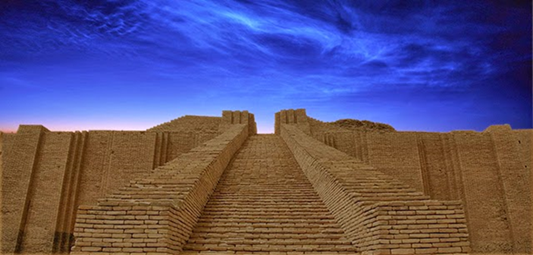
Ziggurat
The Ziggurat of Ur, constructed by King Ur-Nammu in 2100 BC, is one of Mesopotamia ‘s most
renowned ziggurats and a prominent archaeological monument. This stepped pyramidal tower,
made of bricks, clay, and reeds, was dedicated to the worship of the moon goddess Nanna. Built
by King Ur-Nammu, the founder of the Third Dynasty of Ur, the ziggurat is famous for its
resilience and enduring presence, with its remains still standing today.
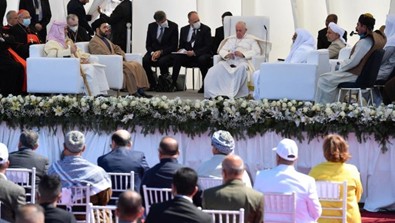
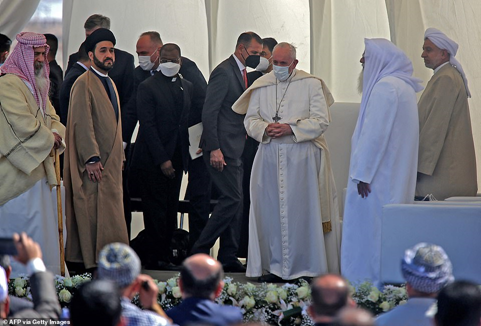
On March 6, 2021, Pope Francis made a historic visit to the ancient city of Ur and the so-called (House of the Prophet Abraham of Hebron)
This visit held both religious and societal
significance. Religiously, it underscored the importance and sanctity of Ur, known as the cradle of
human civilization and home to the (House of the Prophet Abraham Al-Khalil) referenced in
Chapter 11 of the Book of Genesis in the Holy Bible..
Additionally, the sanctity of this site holds significance for followers of the three monotheistic
religions. Socially, the visit aims to promote a spirit of brotherhood, tolerance, and peace among the various religious groups and communities in Iraq. Pope Francis visit could also elevate DhiQar Governorate to international prominence, transforming the city into a global center for monotheistic religions and a destination for Christian pilgrims and other religious and archaeological tourists, given that Dhi Qar contains over 1,200 archaeological sites.
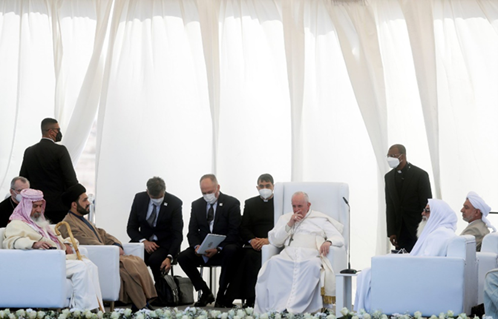
A house in Ur is said to be the house of the Prophet Abraham.
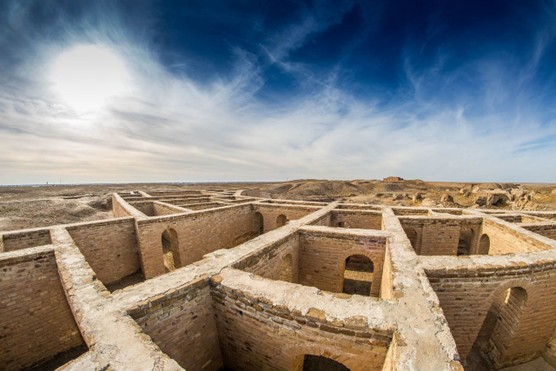
The Ancient City of Uruk
It is an ancient historical Sumerian city, located on the eastern bank of the Euphrates River, about 35 miles (56 kilometers) from the city of Ur, and about 30 kilometers east of the city of Samawah in the Muthanna Governorate in Iraq. In the city of Uruk, writing was invented around 3100 BCE, with the first letter in the world
emerging from this city. Initially, writing was pictorial and later evolved into cuneiform script.
Before 2900 BCE, Uruk played a major role in the world.
Uruk includes many important archaeological sites, the most important of which are:
• Ziggurat of Uruk: A huge temple to the goddess Inanna, considered one of the oldest temples in the world.
• Temple of the Sun God: A temple to the god Utu, the sun god.
• King’s Palace: The remains of the palace of the Sumerian king Gilgamesh.
• The Grand Street: A wide street about 1.2 kilometers long, which connected various parts of the city.
• Royal Tombs: A group of tombs containing the remains of Sumerian kings.
The Ancient City of Warka
An ancient city located in Dhi Qar Governorate, it was one of the most important cultural centers in ancient Mesopotamia. The city is famous for the Ziggurat of Inanna, a huge temple built in the form of an amphitheater. It is one of the first civilizational centers in the world
that appeared at the beginning of the Bronze Age, about 4000 years BCE.
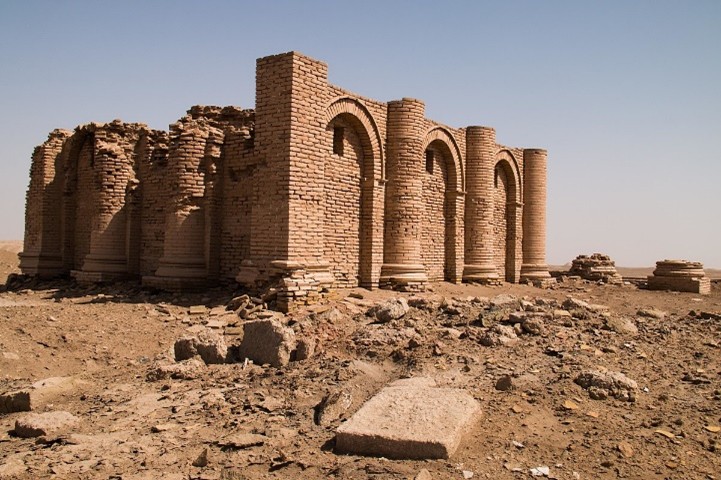
The Temple of Carius is one of the most important temples in the ancient city of Warka and dates back to the Seleucid period. It is said that the city of Uruk had a circumference of about 6 km, and thus it was the largest city in the world at that time. The Epic of Gilgamesh also appeared in this city,
and a civilization arose in it that knew cuneiform writing. Which consisted of simple pictures of things on clay tablets, in which the cuneiform script was followed.
The city of Warka has maintained its status as a religious city and a center for the worship of the goddess Ishtar, the goddess of love and war.
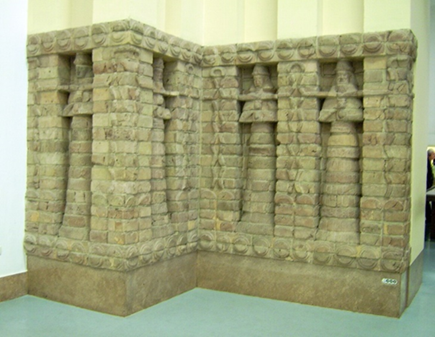
Statue from Uruk